
Bridging the Smile Gap Jessica HaddadPhiladelphia, Pennsylvania
Bridging the Smile Gap focuses on community involvement in the Philadelphia region, helping provide preventive and restorative dental care to underprivileged and/or undocumented individuals.
Connecting Patients to Affordable Dental Care
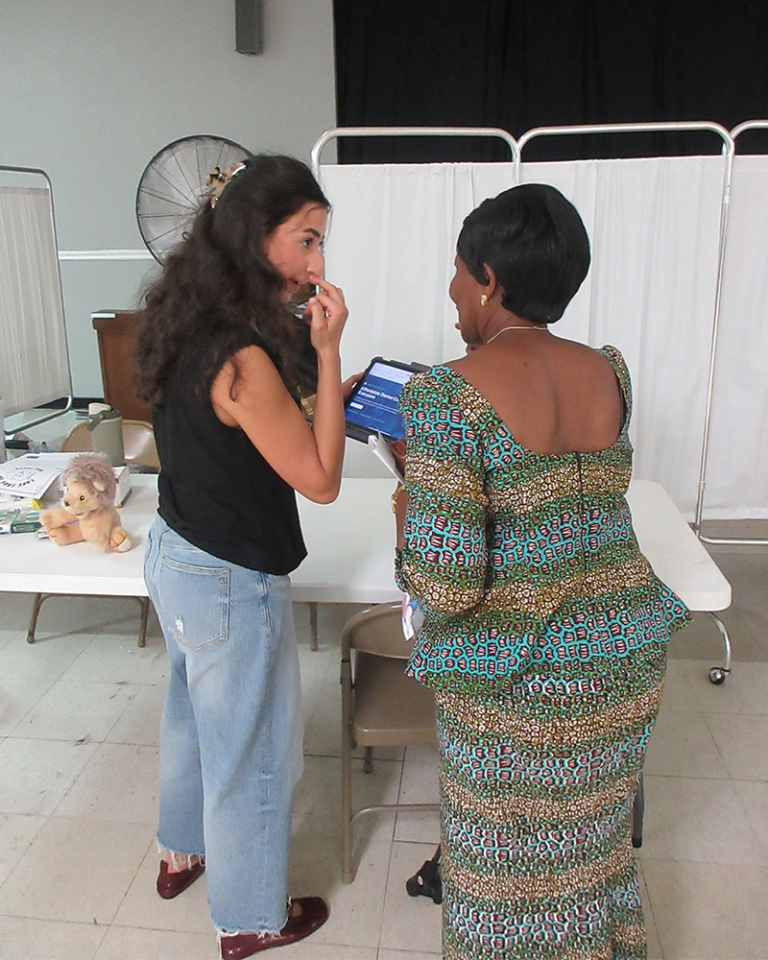
Bridging the Smile Gap focuses on community involvement in the Philadelphia region, helping provide preventive and restorative dental care to underprivileged and/or undocumented individuals. The project was inspired by Jessica’s volunteer experiences, where she saw firsthand the financial, language, and ethical impediments that often prevented the patients from receiving necessary dental care. Through this website and weekly Health Promoter Programs, these people are now referred to a nearby dental clinic or school that can help them afford the dental care they need. Based on the African, Hispanic, and Asian communities, the services were offered directly at the event, and a representative from either the Institute of Clinical Bioethics or the pre-dental society, Delta Delta Sigma, would guide them throughout the process to find a clinic near them using either verbal means or Google Translate found on the website.
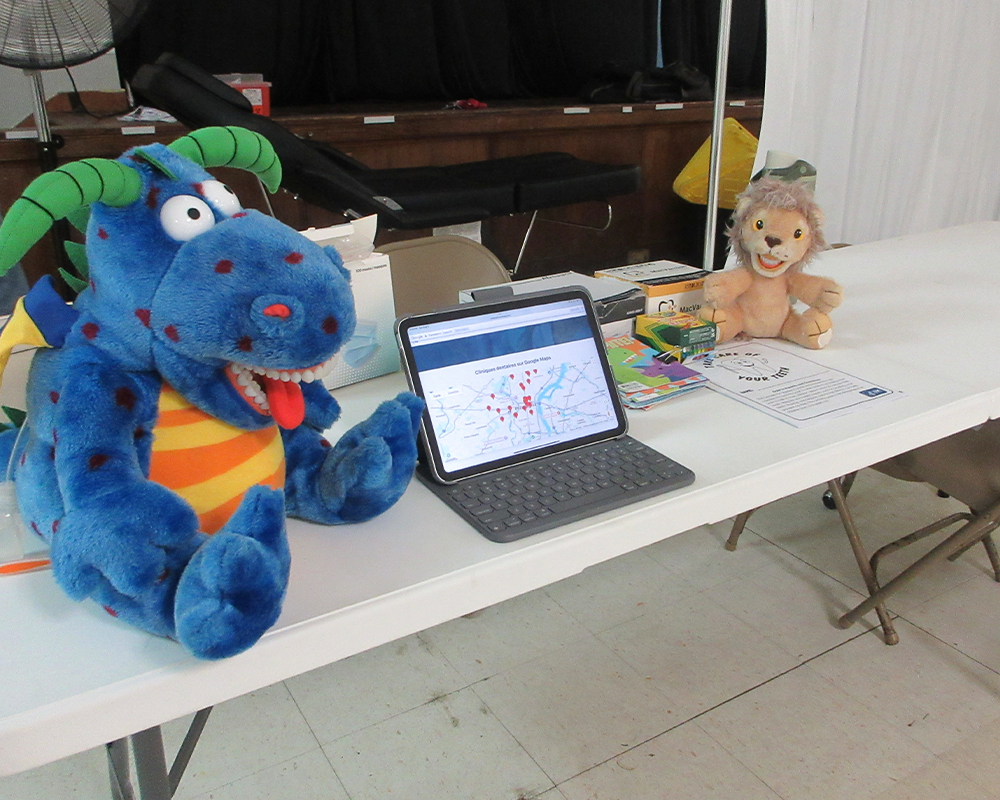
Health Promoter Program setup featuring the dental resource website, free fluoride varnish applications, and oral health education for community members. Credit: Rey Abisaleh
Bringing the Website Into Community Settings
After this fellowship year, Jessica learned many valuable lessons from both others in the group and her personal experiences. One of the biggest milestones was presenting her project to the Institute of Clinical Bioethics for her final thesis presentation, which reflected on how much the project developed from the original idea. Another success was seeing website visits increase within the first few months, along with positive feedback from external board members. After conversations with university board members, they recognized the resource’s value and potential in Philadelphia. While these
While these milestones demonstrated progress on paper, the most memorable moments came from in-person interactions. In each health clinic, she worked directly with patients to better understand each person’s barrier to dental care, explained available resources, and overcame language barriers to guide them towards a clinic. These experiences reinforced the project’s purpose throughout the fellowship year. After being accepted to Temple University’s Kornberg School of Dentistry, she will have the opportunity to continue developing and sharing the website in Philadelphia, where the project first began. The next chapter will focus on building stronger community relationships through the fellowship while continuing to serve underprivileged individuals.
Turning a Screening Into a Next Step
This project has an impact based on continuity of care, specifically dental, by connecting the underserved communities with affordable restorative services on a sliding-scale basis after receiving preventive care through the Health Promoter Programs. These programs serve approximately 5,000 patients annually in trusted community settings throughout Philadelphia. These five sites include consulates, community centers, food pantries, and churches. Patients not only receive a basic screening at these events, but are also directed to a nearby clinic or school that offers lower-cost care based on their income. The website also provides multilingual support in 18 languages, helping reduce language barriers in the community. The development and implementation of Bridging the Smile Gap involved the collaboration of the Institute of Clinical Bioethics, undergraduate fellows, dentists, and dental students. At these events, participants receive a dental screening, fluoride treatment (with consent), oral health education, and hygiene supplies (including toothbrushes, toothpaste, and floss). Overall, the project reinforces the purpose of creating an easier pathway for the patients to receive follow-up dental care.
A moment that occurred during her fellowship was during one of the Hispanic Health Promoter Programs at the Guatemalan Consulate. After showing two young girls how to properly brush their teeth using the dinosaur model, Jessica spoke with their father and explained that his daughters needed to care for their primary teeth. A common barrier in these populations was that patients knew there was a problem but could not afford a solution. Using her limited Spanish, Jessica told the father about the website and helped locate a clinic using their address through the integrated Google Map. That day, the family left with something more than educational materials or a toothbrush; they left with a greater sense of hope that receiving dental care was possible. The girls’ hugs at the end of the interaction made the experience meaningful for Jessica and the other dental volunteer.
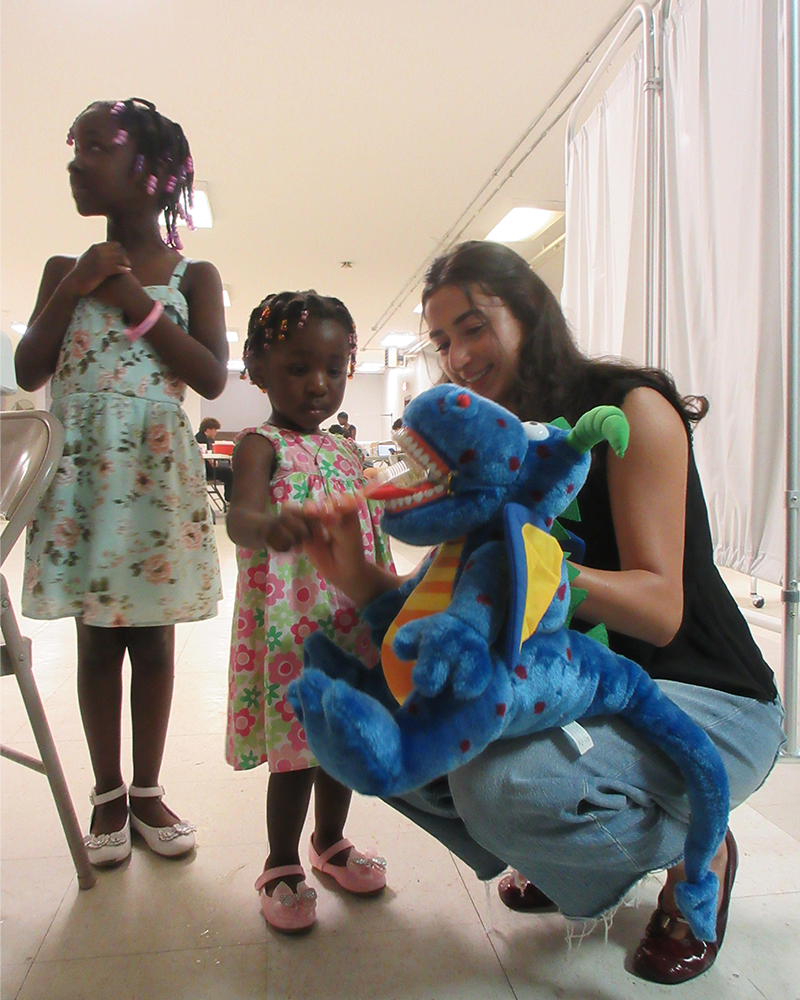
Interactive oral health education at the Health Promoter Program, using a dental model to teach proper brushing technique to children. Parental consent was obtained. Credit: Rey Abisaleh
This moment serves as a reminder that each family should always leave these promoters supported and knowledgeable about the next step for their health.
About Jessica Haddad
Jessica Haddad is strongly committed to healthcare equity, bioethics, and service to underserved communities. As a Senior Fellow at the Institute of Clinical Bioethics, she leads initiatives that provide dental and medical preventive care through the Health Promoter Programs. Her experiences as a dental assistant, researcher, and health promoter coordinator have shaped her vision of accessible, ethical dentistry. She has worked closely with diverse populations across Philadelphia, combining compassion, service, and creativity to make a lasting impact.
Instagram: @sju_icb
Website: bridgingthesmilegap.com icbhealthpromoter.org
#BridgingtheSmileGap #DentalHealthPromoter #ICB