
Mapping Miami Miranda de Gasperi Miami, Florida
Mapping Miami is a participatory art and digital archiving project that invites Miamians to map, document, and reflect on the city.
Miamians Map, Document, and Reflect on Their City
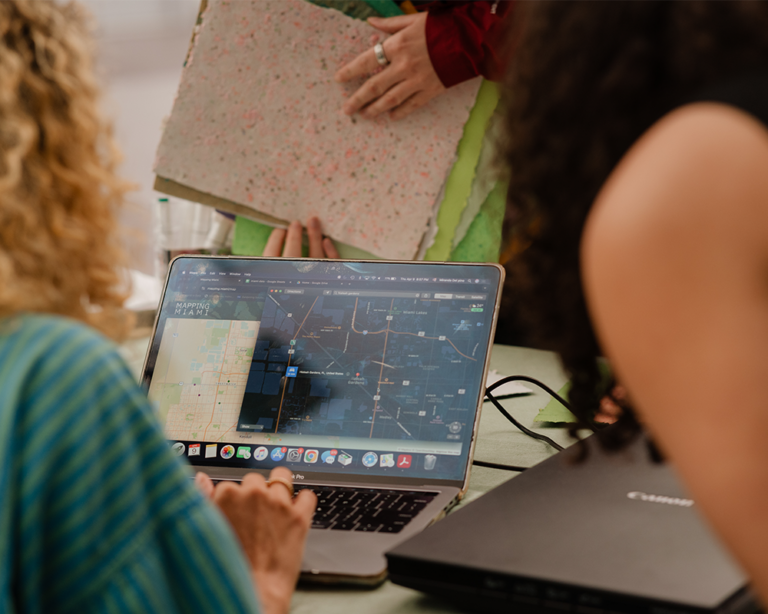
Mapping Miami is a participatory art and digital archiving project that invites Miamians to map, document, and reflect on the city. The concept grew out of Miranda’s background in GIS and from a simple observation: Miami is changing fast. Overdevelopment, gentrification, and climate change are reshaping neighborhoods faster than anyone can record what those places meant to the people who live in them. She envisioned a project that could democratize archiving, and found it through art.
With KECC support, Buen Provecho Collective ran free pop-up workshops across Miami, each hosted at a different venue and featuring a different local artist. Participants engaged in conversation and then created visual art responses about places meaningful to them. These artworks were scanned on-site and archived on a digital map that anyone can access, building a community-driven record of what Miamians value most while making different art mediums accessible.
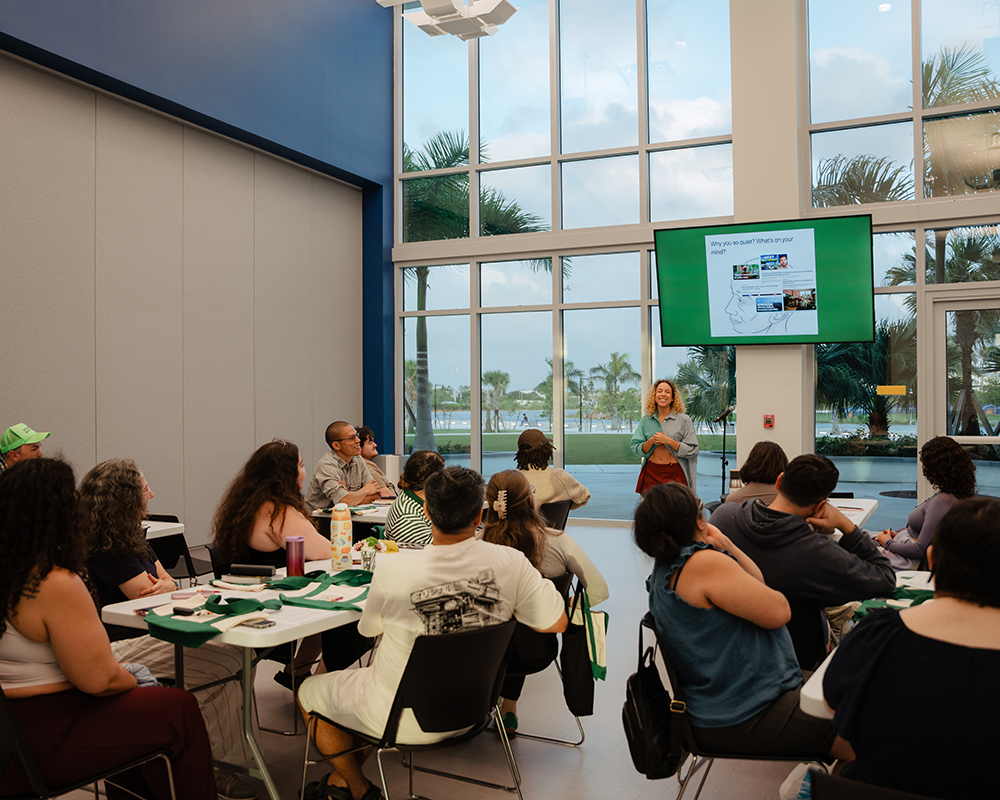
Miranda presenting Mapping Miami at the poetry session. Credit: Chantal Lawrie
Success Takes Up a Village
The biggest success was finally launching the website after months of work with web developer Rebecca Sell. Each workshop was a success in its own right; it truly takes up a village, requiring coordination and planning, effort and presence from the artists and venues, and community participants showing up.
An unexpected success was being selected for O, Miami’s Poetry Month workshop series, which provided additional funding and institutional support for another workshop. Another was having other cultural organizers reach out to BPC to collaborate or to incorporate Mapping Miami into their own programming, without BPC having to make the first approach. This created community relationships the project hadn’t sought and brought Mapping Miami to more diverse audiences. Among the most memorable moments: an illustrator who attended the first session, having once made a map for a local museum, returned to the next two with her partner and to a fourth with their child. Several participants came back repeatedly, turning a series of one-off pop-ups into something closer to a recurring gathering,
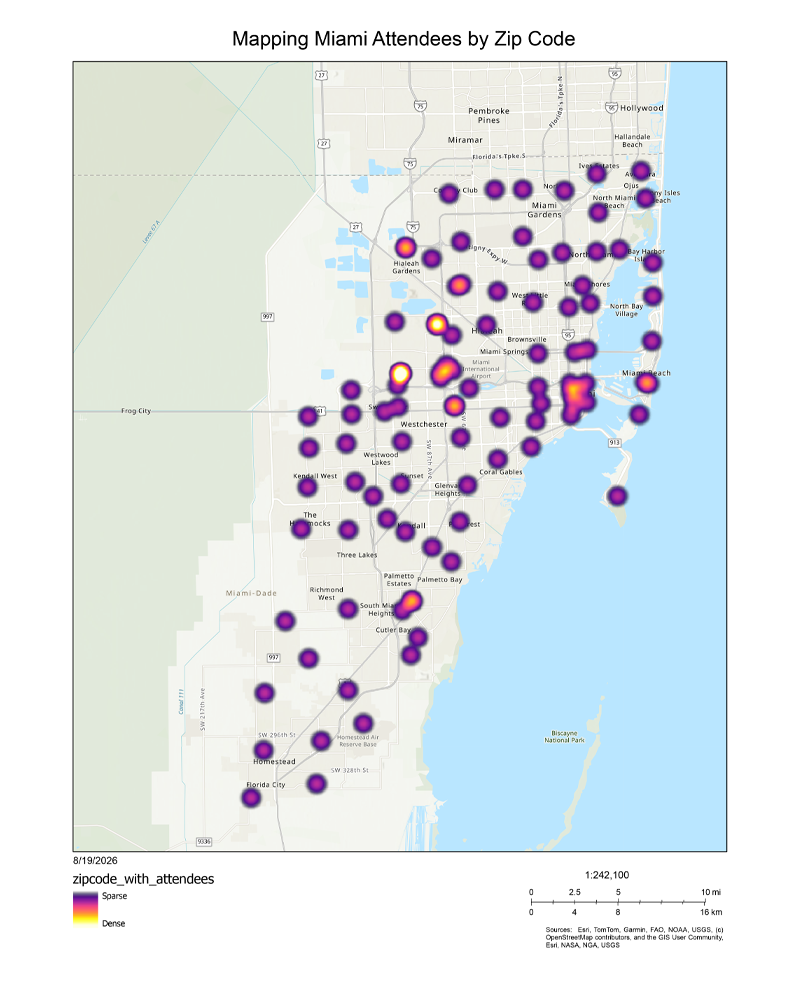 Mapping Miami Engaged Participants from Almost Every Zip Code in Miami-Dade County
The original goal of creating the digital archive in the form of a website was achieved. Miranda and team organized and successfully executed five workshops in different locations, each featuring different artists. Beyond that, Mapping Miami engaged participants from almost every zip code in Miami-Dade County; a very important indicator of success, confirming that the project was genuinely accessible, geographically and otherwise, to the entire Miami community. That community organizers have since approached BPC to bring Mapping Miami into their programming suggests the project’s value is coming through effectively on social media.
Managing so many workshops was challenging: planning, outreach, materials purchasing, meeting with the artists, walkthroughs of the venues, filming promos and making flyers for social media, managing RSVPs, planning and executing everything day-of, hosting, handling all the artwork and location data and getting it uploaded to the map, and staying within budget. It was more work than anticipated, but every second was worth it.
BPC navigated this by leaning on its support network. One event exceeded anticipated capacity, and the team was nervous about managing logistics and ensuring everyone had a good time. A social media ask brought in three incredible volunteers who helped day-of: managing materials, guiding participants through the cyanotype process, and cleaning up the space. With the right support, nothing is too much.
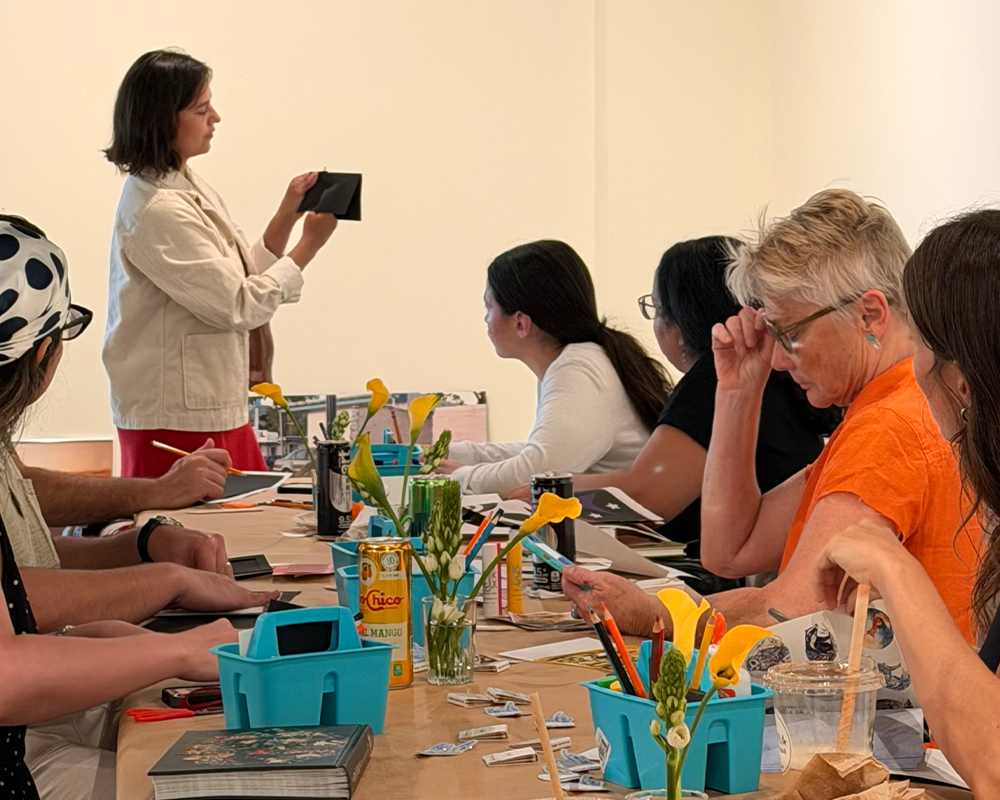
Nicole Combeau guiding participants on how to create an accordion-fold book. Credit: Miranda De Gasperi
People Were Not Archiving Their Own Memories; They Were Keeping Someone Else’s
Over the fellowship year, Mapping Miami hosted five free workshops in five different Miami-Dade communities, engaging 153 participants. Sessions took place at the Main Branch of the Miami-Dade Public Library (46 participants), Vizcaya Museum & Gardens (50), the Doral Cultural Arts Center in partnership with O, Miami (20), Bakehouse Art Complex (15), and Mapou Librerie as part of Lakay Fest in Little Haiti (22).
Each session was shaped by a different local artist, so every workshop carried a distinct cultural voice and creative practice: photographer and archivist Zonia Zena; cyanotype and assemblage artist Tina Murcia; poet Z Yasmin Waheed; visual artist and papermaker Shawna Moulton; photographer and bookmaker Nicole Combeau; and photographer Christopher Mitchell. Every artist was compensated, in keeping with BPC’s standing practice of paying artists for their work.
RSVP data showed participants from nearly every zip code in Miami-Dade County, a key measure of whether the project was truly accessible across a geographically sprawling and often segregated city. (See attached map.)
The team scanned every artwork on-site and archived it on mapping.miami, a public digital map built with web developer Rebecca Sell and freely accessible to anyone.
The Clearest Lesson Of The Year: Scale
Looking back, I underestimated the operational weight of running five workshops in five months. The skills I developed was not doing more, but asking for help earlier and more directly. The open call that produced three volunteers for the largest session reframed capacity as something a community supplies, rather than something one director must personally generate.
The archive itself revealed a quieter pattern. Many of the places people chose to document no longer exist. Participants gravitated overwhelmingly toward public and third spaces: libraries, parks, storefronts, corners. And when someone mapped a private home, it was almost always in remembrance of a relative rather than of themselves. People were not archiving their own memories; they were keeping someone else’s. A third predominant theme was the natural landscape, which can hopefully contribute toward a collective valuation of green and wild spaces in Miami.
The photowalk is the clearest example. The workshop itself was engaging and successful, but because many participants brought film cameras that needed developing or digital cameras that needed downloading, it was the only session where artwork was not collected on-site. Everyone received a QR code to upload later, and many of those images still have not been submitted. The format worked as an experience but fell short of the archive’s central purpose; it needs troubleshooting before repeating it.
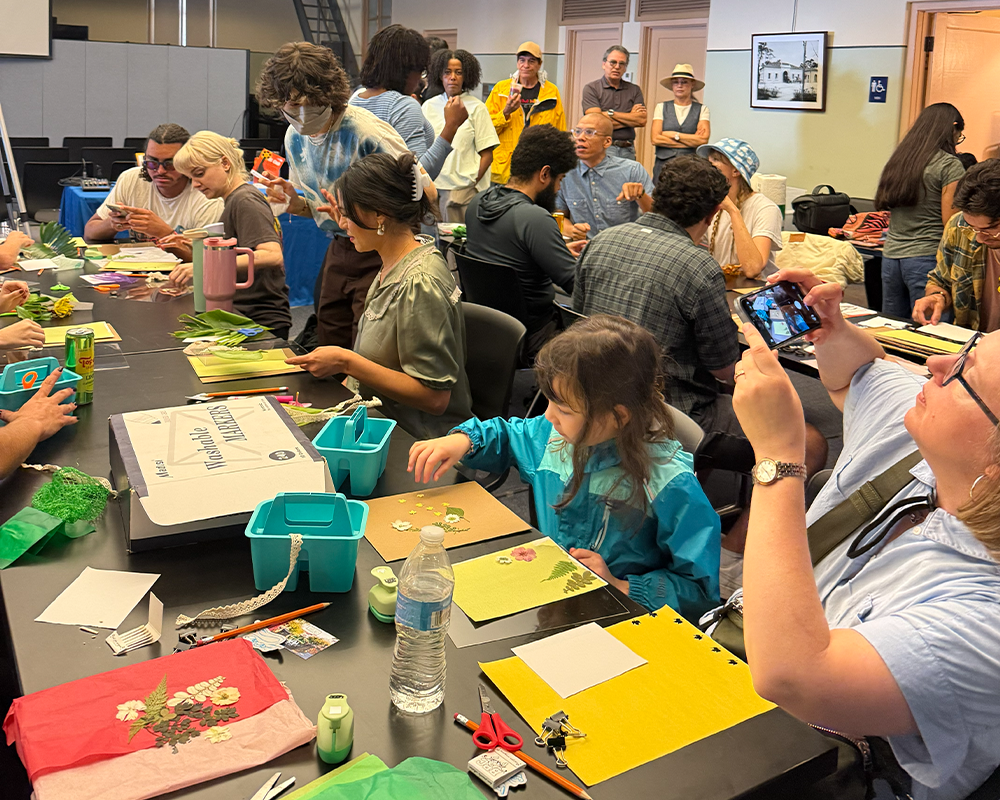
Cyanotype workshop at Vizcaya Museum Farmers Market in full swing. Credit: Valerie Ingaroca
Libraries, Art Centers, Mentors and collaborators
One of the project’s greatest strengths was the new partnerships it fostered across Miami’s cultural community. Most partnerships were newly established: only two of the six artists had previously worked with BPC or Miranda, and Vizcaya Museum was the only returning institutional partner.
New organizations and venues: the Main Branch of the Miami-Dade County Public Library, the Doral Cultural Arts Center, O, Miami, Bakehouse Art Complex, Mapou Librerie, and Lakay Fest.
Artists: photographer and archivist Zonia Zena; cyanotype and assemblage artist Tina Murcia; poet Z Yasmin Waheed; visual artist and papermaker Shawna Moulton; photographer and bookmaker Nicole Combeau; and photographer Christopher Mitchell.
Key collaborators included: Krys Ortega (Bakehouse), Yaddyra Peralta, Caroline Cabrera, and Penny Crane (O, Miami), Jonathan Quiñones and Loretta Thompson (MDCPLS), and Monica Sorelle and Robert Colom-Vargas (Lakay Fest).
These partnerships quickly proved valuable. O, Miami provided funding, operational support, and venue access, leading to additional programming opportunities. Similarly, the Public Library Main Branch welcomed the young audiences BPC attracted while introducing participants to library services.
BPC expanded its network through partnerships with Bakehouse Art Complex and Lakay Fest, creating new opportunities for collaboration, audience growth, and future funding.
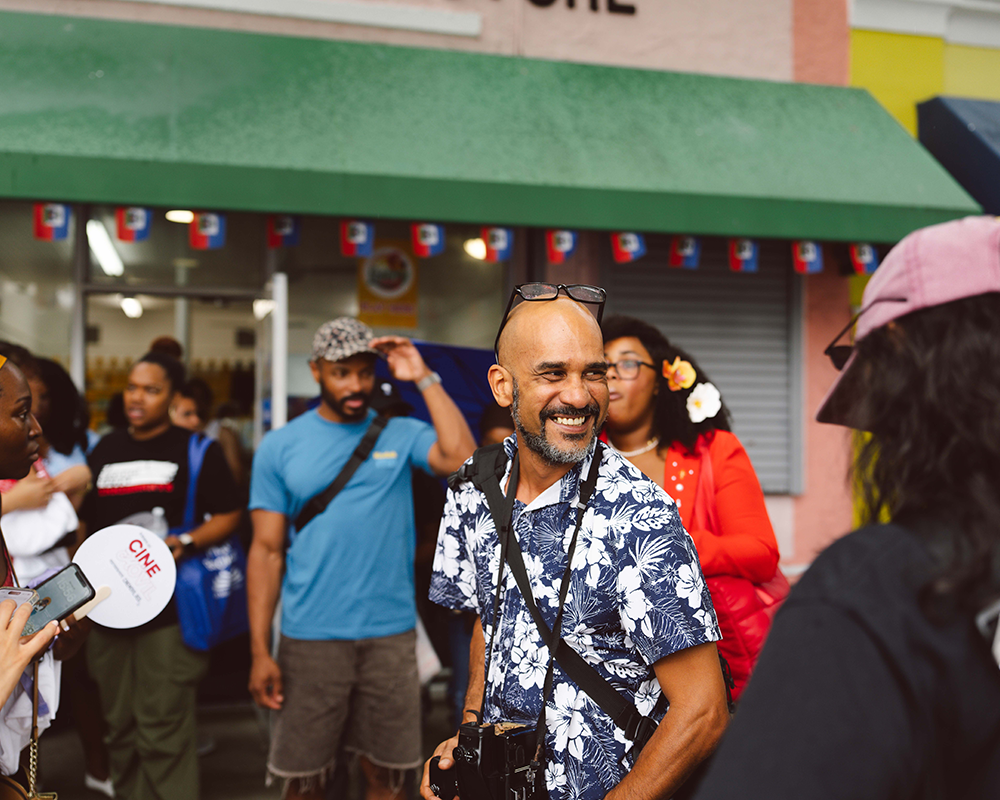
Artist Chris Mitchell and his film camera, in front of the historic Librerie Mapou in Little Haiti ready to take a group on a photowalk of the neighborhood. Credit: Martina Tuaty
Mapping Miami Now Exists as a Permanent Public Archive
The best part of being a Knight Emerging City Champion was the empowerment that came from having such an institution believe in this project.
Miranda couldn’t attend the in-person sessions in Toronto, but still found enormous value and inspiration in following along with her fellow Champions’ projects and stories. Having a cohort, rather than an isolated grant experience, served as consistent reassurance and motivation – a reminder that all the Champions are working toward a similar goal, each in immensely varied and creative ways.
KECC funded a workshop series, and what it produced was infrastructure. Mapping Miami now exists as a permanent public archive, and it will keep accepting submissions long after the fellowship closes. The connections built during the year have already generated their own momentum: the Main Branch has invited BPC to host quarterly cultural programming, O, Miami is planning a second partnered workshop, and a further round of sessions is in development for the fall with new cultural and environmental partners.
The shift for Miranda has been in scale of ambition. Before this year, BPC operated event to event. The fellowship demonstrated that an institution’s belief, paired with a clearly articulated mission, opens doors that no single event can. Her goal moving forward is to build the operational capacity to meet that demand: to say yes to the quarterly invitations, and to grow Mapping Miami into an ongoing civic archive that outlasts any funding cycle.
About Miranda De Gasperi
Miranda De Gasperi is a Peruvian-born, Miami-based interdisciplinary artist and cultural organizer. She is the founder and director of Buen Provecho Collective, a nonprofit that creates accessible art programming rooted in creativity, community, and connection. Trained in environmental science and GIS, she brings a spatial lens to cultural work, at the intersection where Mapping Miami was born. In her personal practice, Miranda explores the bridge between the seen and the unseen through painting and movement. Immigration, memory, culture, and a deep love for the moments of tenderness that shape our human experiences shape her lens.
Follow the project @buenprovecho.collective, @camoteconpan
Relevant links