
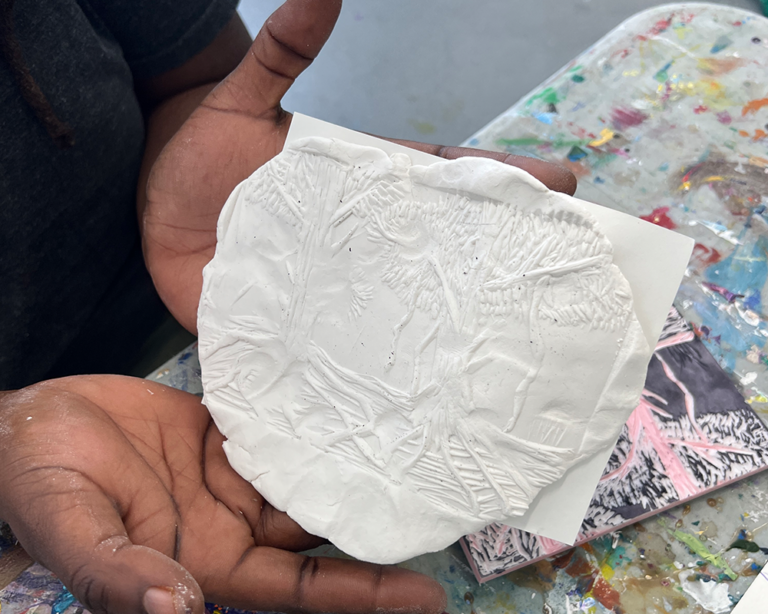
The Evolving Edge Jacoub Reyes Miami
Jacoub Reyes's project, The Evolving Edge, brought a series of hands-on art workshops to communities across Miami to explore the intricate patterns of mangrove roots and shaped ceramic forms, creating an accessible entry point into both artmaking and ecological awareness.
Jacoub Reyes’s project, The Evolving Edge, brought a series of hands-on art workshops to communities across Miami. Participants engaged in printmaking to explore the intricate patterns of mangrove roots and shaped ceramic forms inspired by their unique structures, creating an accessible entry point into both artmaking and ecological awareness. These sessions culminated in collaborative public art exhibitions that visually narrated the important role mangroves play in coastal protection.
Jacoub’s inspiration grew out of his ties to Miami’s artistic and environmental communities and his years exploring the city’s unique coastal ecosystems. He designed the project to strengthen trust and connection among diverse residents, particularly in neighborhoods most vulnerable to sea-level rise, by bringing them together through a shared creative experience rooted in a locally relevant environmental issue. He hoped to build community resilience by increasing environmental literacy and inspiring collective action to protect these natural defences against a changing coastline.
Community Activations: The Heart of the Fellowship
Looking back on the fellowship year, Jacoub points to the community activations themselves as the clearest highlight, moments when neighbors of different ages and abilities sat down at the same table to carve, print, and shape clay together. He was especially moved by the project’s reach across age groups and learning abilities, seeing participants who had never picked up a carving tool or worked with clay to engage confidently and creatively. Showcasing participants’ finished work and introducing them to art techniques they had never encountered before stood out as one of the year’s proudest accomplishments. An unexpected success was the digital zine that emerged from the workshops: it gave participants a lasting way to revisit the themes explored in the sessions and to see their own work situated within the project’s larger story, extending the workshops’ impact well beyond the day each one took place.
Mangrove Ecology At The Center
“The Evolving Edge” achieved the goals Jacoub set out to accomplish, bringing residents together around mangrove ecology through printmaking and ceramics and translating that shared experience into public exhibitions that speak to coastal resilience. Along the way, the project evolved in response to what he learned on the ground; partnerships shifted, workshop formats were adjusted to meet participants where they were, and the digital zine emerged as an additional, unplanned outcome that deepened the project’s educational reach. These changes sharpened the original vision, and Jacoub closed the year having delivered on the project’s core promise while discovering new directions to carry forward.
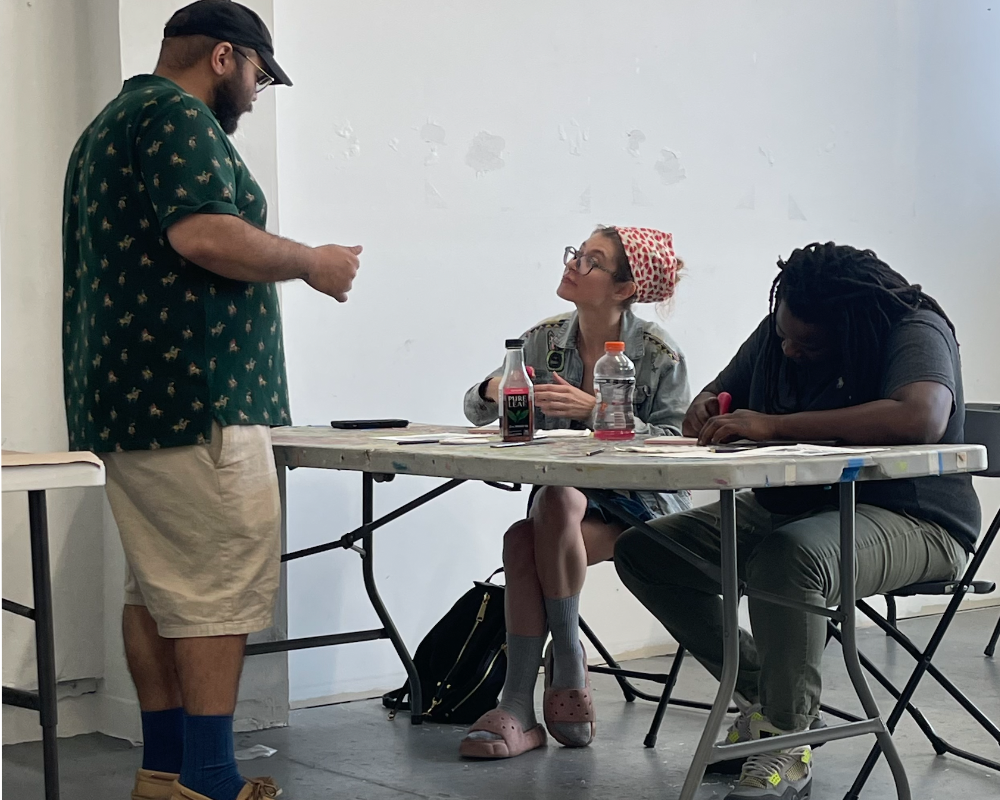
Community-engaged Public Art Depends On Relationships Established Before A Project Begins
The biggest challenges Jacoub faced were securing partner sites to host workshops and building enough momentum to attract community members. Rather than waiting for institutional partnerships to materialize, he drew heavily on his personal and professional networks, leveraging relationships cultivated over years within Miami’s arts and environmental communities to secure venues, promote events, and engage participants. This reliance on established connections became a defining feature of the project’s success, reinforcing his belief that community-engaged public art is rooted in relationships built long before a project begins.
Seven Workshops, more than 200 Community Members Engaged in Mangrove Ecology
The Evolving Edge engaged more than 200 community members over seven workshops, bringing residents together to explore mangrove ecology through printmaking and ceramics. Beyond the workshops themselves, Jacoub saw the project’s impact ripple outward: participants left inspired to seek out mangroves in their own neighborhoods, and to look at the coastline around them with new appreciation for what these ecosystems provide. The project was developed and implemented with the support of local artists, arts organizations, and public spaces that opened their doors to host the sessions, grounding the work in Miami’s existing creative and civic infrastructure rather than building something separate from it.
One moment that stayed with Jacoub was connecting with other marginalized local artists and sharing the printmaking and ceramic techniques at the heart of The Evolving Edge directly with them. Rather than the impact stopping with the workshop participants, these fellow artists left equipped to carry the techniques into their own communities, empowered to teach and share what they had learned on their own terms. That multiplying effect, watching the project’s reach extend through other artists rather than through Jacoub alone, reminded him why this work matters and how community-engaged art can keep growing long after a single workshop ends.
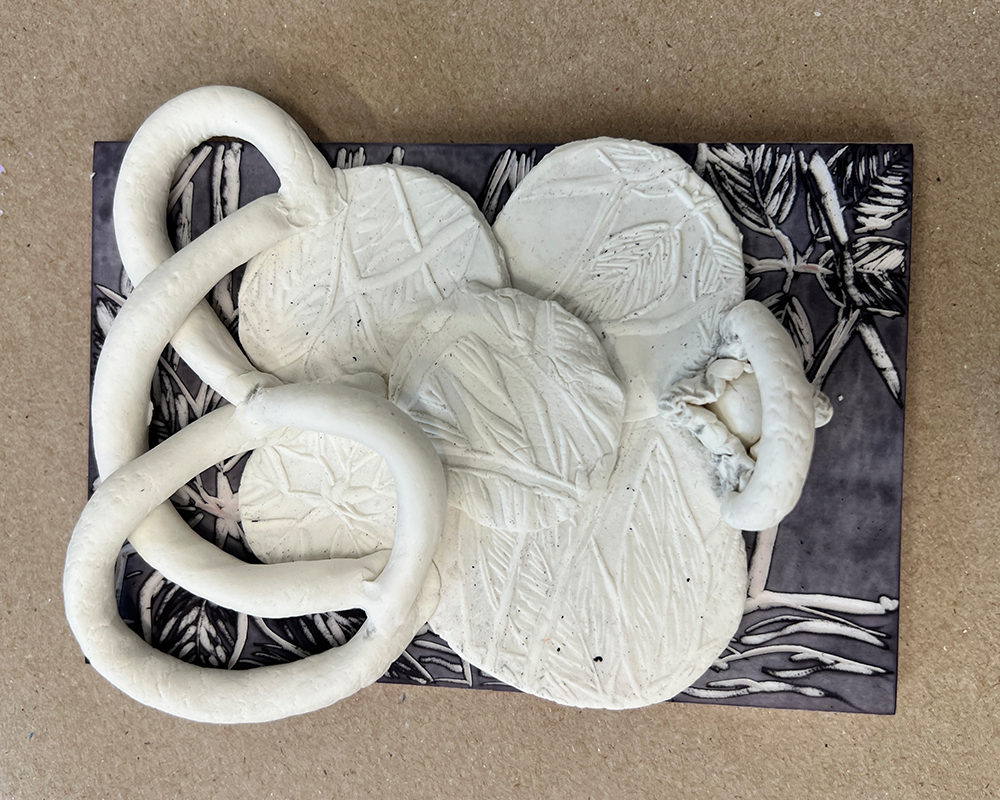
Art Can Sit at the Intersection of Other Industries
Jacoub learned a great deal from his cohort and the monthly KECC meetups, particularly around how art can sit at the intersection of other industries and how those intersections can open doors to new connections and additional initiatives. Listening to previous Champions share their own journeys proved especially valuable, offering him a clearer sense of what was possible and what pitfalls to anticipate. Over the course of the year, he also grew as a leader, developing a more effective approach to guiding a project, a team, and a community of participants through the ups and downs of bringing The Evolving Edge to life.
Looking back, Jacoub would have liked to partner with more parks in the area from the outset. He is already planning to close this gap as he continues the initiative, building deeper relationships with park spaces as natural extensions of the project’s community reach.
Collective Commitment to the Local Ecosystem
Over the course of the fellowship, Jacoub held many of the project’s workshops in public spaces and in partnership with local arts organizations, building new relationships with the people and institutions who opened those spaces to the community.
Jacoub hopes to build these relationships to foster a sense of community beyond capitalist ideals, one based instead on shared investment in the environment. He sees these partnerships continuing to grow as the project moves forward, creating a collective commitment to the local ecosystem that extends well past any workshop or installation.
A Sense of Connection
For Jacoub, the best part of being a Knight Emerging City Champion was simply being in community with fellow Champions, especially the in-person time spent together in Toronto. Those shared moments, learning alongside peers doing similarly ambitious work in their own cities, gave the fellowship a sense of connection that carried through the rest of the year.
The KECC experience broadened my sense of what is possible and how to get there, particularly through meetings with council members and other city leaders that opened my eyes to new pathways for community-engaged public art.
The fellowship, its mentorship, and the connections he built have expanded his approach to community work and sharpened his goals as he looks toward the future of this project and beyond.
About Jacoub Reyes
Jacoub Reyes is an artist based in Florida who centers his Caribbean and Pakistani background as a relational point to explore themes of colonialism, social response, and ecosystems in his work with IEA, Ma’s House, The Latinx Project, and CENTRO. Collaborating with Brown University, Alfred University, Kean University, Hunter College, UCSF, and other prestigious institutions, the intersections found in his work have allowed him to travel globally, engaging in lectures, workshops, and community events. Notable accolades include the Center for Craft’s Teaching Artist Cohort, the SFCC Grant, The Puffin Foundation, and The Joan Mitchell Foundation finalist, among others.